
I Make This Every Week and Never Get Bored – Korean Cucumber Salad
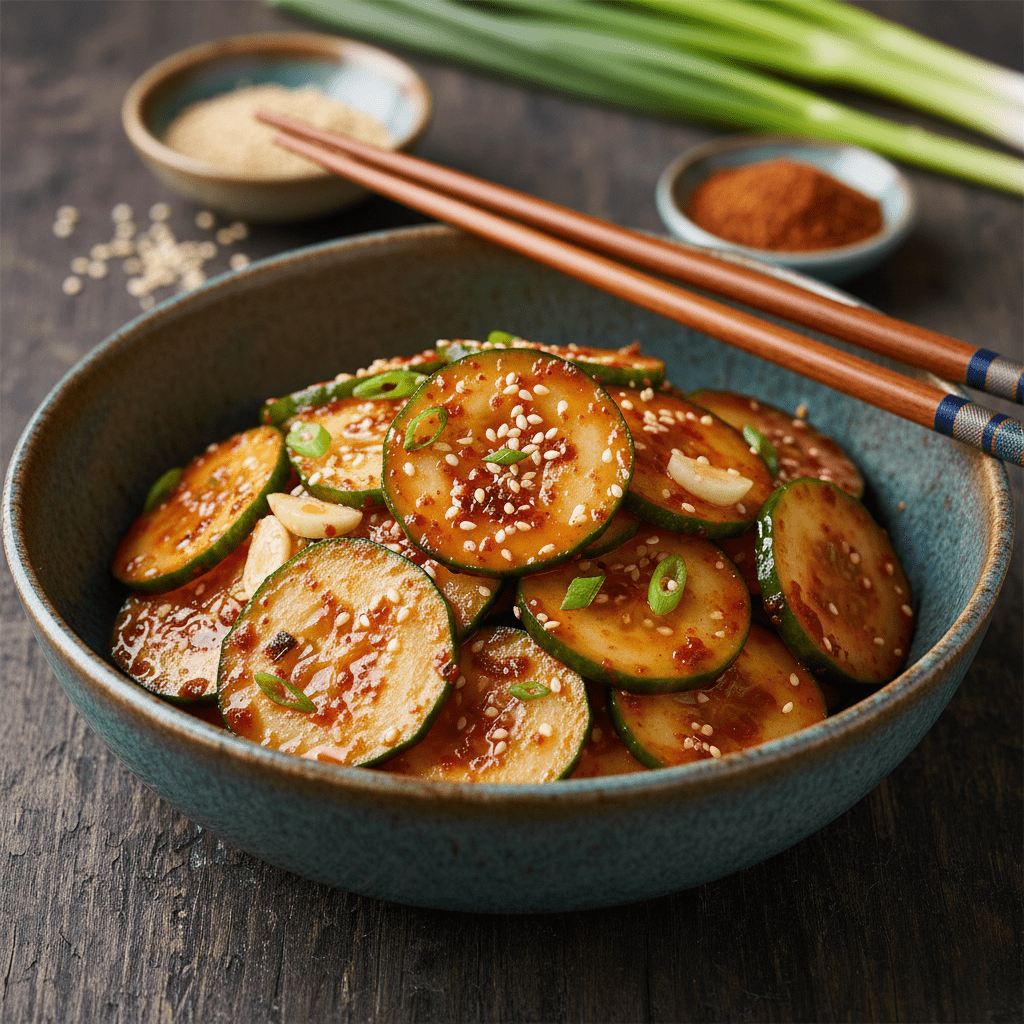
Korean cucumber salad, known as Oi Muchim (오이무침), is one of the most addictive side dishes you will ever make. Thin-sliced or smashed cucumbers are tossed in a bold, garlicky, sesame-chili dressing that hits every note at once — spicy, tangy, slightly sweet, nutty, and deeply savory — in a way that makes it impossible to stop eating and even more impossible to get bored of.
What makes it so reliable week after week is that it takes under 15 minutes, uses pantry staples, and goes with virtually everything. It is a classic Korean banchan, meaning a small side dish served alongside a main meal, but it works just as well as a standalone snack or a bold lunch addition.
Why You’ll Make This Every Single Week
- It comes together in under 15 minutes with zero cooking
- The gochugaru-sesame dressing is bold, layered, and deeply satisfying
- It pairs beautifully with rice bowls, grilled proteins, noodles, or anything Asian-inspired
- It is naturally low carb, vegan, and gluten-free when made with tamari
- It tastes even better after 30 minutes as the cucumbers absorb the dressing
- Times
- Description
- Image
- Ingredients
- Method
- Notes
- Nutrition
- Prep time: 10 minutes
- Cook time: 10 minutes
- Total time: 20 minutes
- Serves: 4
Korean Cucumber Salad
Ingredients
For the cucumbers:
- 4 to 5 Persian or mini cucumbers, or 2 English cucumbers
- 1 teaspoon fine sea salt
For the Korean dressing:
- 1 1/2 tablespoons gochugaru (Korean red pepper flakes), adjust to taste
- 1 tablespoon toasted sesame oil
- 1 tablespoon rice vinegar
- 1 tablespoon low-sodium soy sauce or tamari
- 2 cloves garlic, finely minced or grated
- 1 teaspoon honey, sugar, or maple syrup
- 1 teaspoon toasted sesame seeds
- 2 scallions, thinly sliced
For finishing:
- Extra sesame seeds
- Extra scallions
- A drizzle of chili oil, optional
Method
- 1)
Make sure to carefully follow each step of the instructions for the best results :
- Prepare the cucumbers.
Wash the cucumbers and slice them into thin rounds about 1/8 to 1/4 inch thick. For a more traditional Oi Muchim texture, you can also smash them with the flat side of a knife first and then tear them into irregular pieces — the rough surface grips the dressing far better than a smooth slice. Place the sliced or smashed cucumbers in a colander, sprinkle with the salt, toss well, and let them sit for 10 to 15 minutes to draw out excess moisture. - Pat dry and squeeze.
After resting, gently pat the cucumbers dry with paper towels or wrap them in a clean kitchen towel and squeeze firmly. Removing the excess water is the most important step for a bold, concentrated dressing that clings to every piece rather than pooling at the bottom of the bowl. - Make the Korean dressing.
In a large mixing bowl, combine the gochugaru, sesame oil, rice vinegar, soy sauce, garlic, honey, and sesame seeds. Stir well until everything is evenly mixed. The dressing should look glossy, deep red, and smell intensely fragrant. Taste it before adding the cucumbers and adjust the heat, sweetness, or salt to your preference. - Toss and combine.
Add the dried cucumbers and sliced scallions to the bowl and toss until every piece is completely coated in the red sesame dressing. The cucumbers should turn a deep, glossy orange-red color as the gochugaru coats them. - Rest and serve.
Let the salad rest for at least 15 to 30 minutes before serving so the cucumbers absorb the dressing and the garlic and sesame flavors develop fully. Finish with extra sesame seeds, extra scallions, and a drizzle of chili oil if you like more heat. Serve cold or at room temperature.
- Prepare the cucumbers.
Tips for the Best Korean Cucumber Salad
- Always salt and drain the cucumbers before dressing so the salad stays bold and concentrated
- Use gochugaru specifically — it has a unique fruity, mildly smoky heat that regular chili flakes cannot replicate
- Freshly minced garlic makes a noticeable difference; use it raw for the most pungent, authentic flavor
- Toasted sesame oil is essential; never substitute plain sesame oil
- Smashing rather than slicing gives the most flavorful result since the jagged surface absorbs the dressing deeply
- Rest the salad for at least 15 minutes before serving to let the flavors bloom
- Make a double batch because it disappears fast
Variations
- Mild version. Halve the gochugaru and add an extra teaspoon of honey for a gentler, sweeter version suitable for anyone sensitive to heat
- Ginger version. Add 1 teaspoon of freshly grated ginger to the dressing for a sharper, more warming finish
- Vinegar-forward version. Double the rice vinegar for a more acidic, pickle-like result that pairs beautifully with rich grilled meats
- Sesame crunch version. Add extra toasted sesame seeds and a handful of crushed roasted peanuts on top for more texture
- Din Tai Fung-inspired version. Replace gochugaru with chili oil and add a small pinch of sugar for a cleaner, restaurant-style result
What is Gochugaru and Can I Substitute It?
Gochugaru is a Korean sun-dried red pepper powder with a bright, fruity heat and a slight smokiness that is completely different from cayenne or regular crushed chili flakes. It is the soul of this dressing and worth seeking out at any Asian grocery store or online. If you absolutely cannot find it, a combination of mild paprika and a small amount of cayenne comes closest to the right color and heat level, though the flavor will be less complex.
What to Serve with Korean Cucumber Salad
This salad slots into almost any meal:
- Sesame ginger beef or chicken rice bowls
- Beef and broccoli stir-fry
- Spicy Asian cucumber salad board alongside other banchan
- Grilled salmon or teriyaki chicken
- Bibimbap or Korean-inspired grain bowls
- Instant ramen elevated into a proper meal
- On its own as a deeply satisfying midday snack
Storage
Store in an airtight container in the refrigerator for up to 2 to 3 days. The cucumbers will soften slightly and release more liquid over time, but the flavor deepens beautifully. Drain any excess liquid and toss again before serving leftovers. This salad is arguably even better on day two once the garlic and gochugaru have had time to fully infuse every piece.
Nutrition (Per Serving – approx., 1 of 4)
| Per Serving | Amount |
|---|---|
| Calories | ~65 kcal |
| Protein | ~1g |
| Fat | ~4g |
| Carbohydrates | ~7g |
| Fiber | ~1g |
Values are approximate and may vary depending on the exact ingredients used.
FAQ
What does Oi Muchim mean?
Oi (오이) means cucumber and Muchim (무침) means seasoned or tossed, so Oi Muchim simply means seasoned cucumber — a classic Korean banchan side dish.
Is Korean cucumber salad spicy?
It has a noticeable heat from the gochugaru, but it is a mild, fruity heat rather than a sharp burn. You can easily reduce the gochugaru to make it as mild as you prefer.
Can I make this without gochugaru?
Yes, though the result will be different. A combination of mild paprika and a small pinch of cayenne or chili flakes is the closest substitute.
How do I keep it from getting watery?
Salting and patting dry the cucumbers before dressing is the key step. Even after this, some liquid will accumulate over time — simply drain it before serving.
Can I use this as a topping for rice bowls?
Absolutely. Korean cucumber salad is one of the most popular rice bowl toppings in Korean cuisine and works beautifully spooned over any warm grain or protein bowl.