
Lemon Garlic Salmon (Easy 20-Minute Weeknight Dinner)
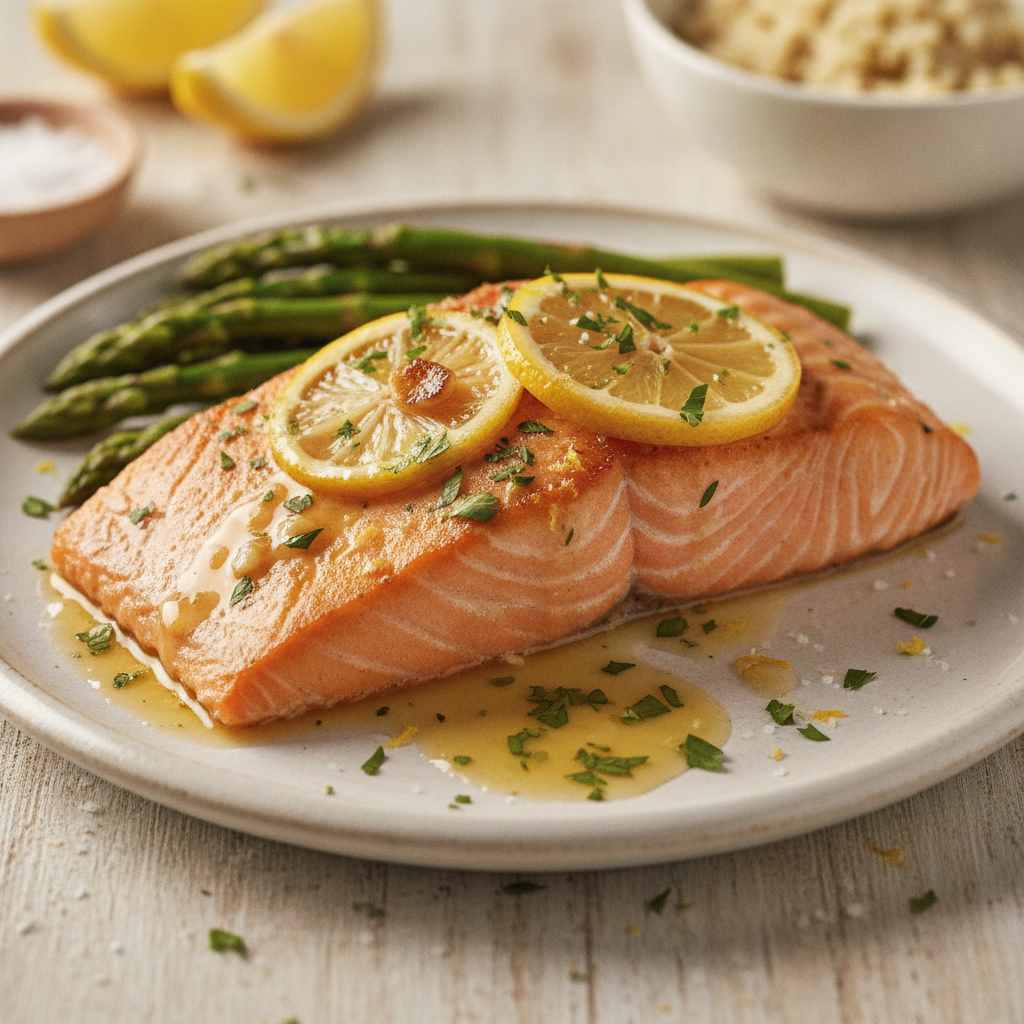
This lemon garlic salmon is the weeknight dinner that checks every single box — it’s fast, healthy, naturally low-carb, and tastes like something you’d order at a nice restaurant rather than throw together on a Tuesday night. Tender, flaky salmon fillets seared to a golden crust and finished in a bright, buttery lemon garlic sauce that comes together in minutes. Twenty minutes from fridge to table, one pan to wash, and zero complaints at the dinner table.
Why You’ll Love This Lemon Garlic Salmon
Salmon is one of the most forgiving proteins you can cook — it’s quick, naturally rich in flavor, and needs very little help to taste absolutely spectacular. A little butter, a little garlic, fresh lemon, and good heat is all it takes to transform plain salmon fillets into a dinner that feels genuinely special. This recipe captures exactly that simplicity without cutting any corners on flavor.
The pan-sear-then-baste method used here gives you the best of everything — a golden, slightly crispy crust on the outside and silky, just-cooked flesh inside that flakes apart at the touch of a fork. The garlic butter sauce builds right in the same pan as the salmon cooks, picking up all those caramelized, savory drippings and turning them into something extraordinary. It’s the kind of technique that looks impressive but takes almost no skill to execute.
This recipe is also naturally gluten-free, keto-friendly, and packed with omega-3 fatty acids, protein, and B vitamins — making it one of the most nutritious quick dinners you can put on the table. Whether you’re cooking for yourself, your family, or guests you want to impress without stressing, this lemon garlic salmon delivers every single time. Now let’s talk ingredients.
Ingredients You Need
Short list, big flavor. Every ingredient is intentional and works hard in this recipe.
- Salmon fillets, skin-on (4 fillets, about 6 oz each) — Skin-on fillets protect the flesh during searing and keep the salmon moist; the skin also crisps up beautifully and is delicious to eat
- Unsalted butter (3 tbsp, divided) — The base of the pan sauce; real butter creates a silky, rich sauce that coats the salmon and carries the garlic and lemon flavors perfectly
- Olive oil (1 tbsp) — Combined with butter for searing; the oil raises the smoke point so the butter doesn’t burn before the salmon gets its crust
- Garlic cloves (5, minced) — Fresh garlic is essential here — it blooms in the hot butter and infuses the entire sauce with deep, savory aroma
- Fresh lemon juice (3 tbsp, about 1.5 lemons) — Bright acidity that cuts through the richness of the butter and salmon; always use fresh, never bottled
- Lemon zest (1 tsp) — Adds an extra layer of citrus fragrance that juice alone can’t replicate; it’s the difference between good lemon flavor and genuinely vibrant lemon flavor
- Dijon mustard (1 tsp) — Adds subtle tang and depth to the sauce and acts as a gentle emulsifier that helps the butter and lemon bind together
- Smoked paprika (½ tsp) — Seasons the salmon directly and adds a subtle warmth that complements the lemon beautifully
- Garlic powder (½ tsp) — Used directly on the salmon for layered garlic flavor throughout, not just in the sauce
- Kosher salt (1 tsp) and black pepper (½ tsp) — Season the salmon directly; don’t be shy — salmon needs a confident hand with seasoning
- Fresh parsley (2 tbsp, chopped) — Stirred into the sauce at the end for fresh, herbal brightness and added to the plate as a garnish
- Lemon slices (for serving) — Placed on the finished salmon for a beautiful presentation and an extra squeeze of fresh lemon right before eating
- Red pepper flakes (pinch, optional) — Adds a gentle background heat that plays beautifully against the lemon and butter
How to Make Lemon Garlic Salmon Step by Step
One skillet, two stages, twenty minutes. Follow these steps and you’ll have perfectly cooked salmon with a restaurant-quality pan sauce every single time.
- Take the salmon out of the fridge 10–15 minutes before cooking. Bringing it closer to room temperature helps it cook more evenly and prevents the outside from overcooking while the center is still cold.
- Pat the salmon fillets completely dry on both sides with paper towels. This is the most important step for getting a good sear — moisture creates steam, which prevents browning.
- Season the salmon on both sides with salt, pepper, garlic powder, and smoked paprika. Press the seasoning in gently so it adheres to the flesh.
- Heat a large skillet (cast iron or stainless steel) over medium-high heat. Add olive oil and 1 tablespoon of butter. Let the butter melt and foam, then wait for the foam to subside — that’s the signal it’s hot enough.
- Place the salmon fillets skin-side UP in the pan. Sear undisturbed for 3–4 minutes until a deep golden crust forms on the flesh side. Don’t touch or move them — patience here is rewarded with a beautiful crust.
- Flip the salmon carefully using a thin spatula. The flesh side should release easily from the pan when it’s ready — if it sticks, give it another 30 seconds.
- Reduce heat to medium and cook skin-side down for another 2–3 minutes. The skin will crisp up and the flesh will become opaque about three-quarters of the way up the fillet.
- Push the salmon to one side of the pan and add the remaining 2 tablespoons of butter to the empty space. Once melted, add the minced garlic and cook for 30–60 seconds until fragrant and just barely golden — watch it carefully.
- Add the lemon juice, lemon zest, and Dijon mustard to the pan. Stir the sauce together and spoon it continuously over the salmon for 1–2 minutes. This basting step finishes cooking the salmon and coats every inch in that gorgeous sauce.
- Check for doneness — the salmon should flake easily with a fork and appear opaque throughout, or register 125–130°F (52–54°C) for medium, or 145°F (63°C) for fully cooked through.
- Remove from heat, stir in fresh parsley, and spoon all remaining pan sauce generously over the fillets.
- Serve immediately with lemon slices and a final crack of black pepper.
Tips for Perfect Lemon Garlic Salmon Every Time
Salmon cooks fast, which means a few smart habits make all the difference between perfectly cooked and overcooked.
- Dry the salmon thoroughly before it hits the pan. Any surface moisture will steam the fillet instead of searing it, and you’ll lose that golden crust entirely. Paper towels are your best friend here — press firmly on all sides.
- Don’t move the salmon while it’s searing. Once it goes in the pan, leave it alone. The fillet will naturally release from the pan surface when the crust has properly formed. Trying to flip it too early tears the crust and sticks — patience always wins.
- Watch your garlic closely. Garlic goes from golden and fragrant to burnt and bitter in under a minute in a hot pan. As soon as it smells toasty and turns light gold, add your lemon juice immediately — the liquid cools the pan instantly and stops the garlic from burning.
- Pull the salmon slightly early. Salmon continues to cook off the heat from residual warmth. Pull it from the pan when it’s just barely opaque in the very center and let it rest for 2 minutes — it will finish cooking perfectly and stay moist rather than drying out.
- Use a fish spatula. A thin, flexible fish spatula is the right tool for flipping salmon without tearing it. A regular spatula is too thick and inflexible to slide cleanly under the fillet without breaking it apart.
- Room temperature salmon is not optional. Cold salmon straight from the fridge cooks unevenly — the outside overcooks before the center warms through. Even 10 minutes on the counter makes a noticeable difference in the final texture.
Low-Carb Variations
This lemon garlic salmon recipe is already fully keto-friendly and low-carb as written, but here are four ways to switch it up while keeping things clean:
- Mediterranean Lemon Garlic Salmon: Add a handful of halved cherry tomatoes, Kalamata olives, and capers to the pan sauce right after the garlic. Let them warm through for 2 minutes before spooning over the salmon. Top with crumbled feta cheese at the table for a Greek-inspired version that’s vibrant, briny, and incredibly satisfying.
- Creamy Lemon Garlic Salmon: After adding the lemon juice, stir in 3 tablespoons of heavy cream to the pan sauce. Let it reduce for 1–2 minutes until slightly thickened. The cream transforms the butter-lemon sauce into a rich, velvety coating that clings to every bite.
- Herb-Crusted Lemon Garlic Salmon: Before searing, press a mixture of finely chopped fresh dill, parsley, and chives mixed with lemon zest directly onto the flesh side of each fillet. The herbs form a fragrant green crust that smells incredible in the pan and adds a whole new layer of fresh flavor.
- Spicy Chili Lemon Garlic Salmon: Add 1 teaspoon of chili garlic sauce or sriracha and a generous pinch of red pepper flakes to the sauce along with the lemon juice. Finish with a squeeze of lime instead of lemon and garnish with sliced green onions for a bold, spicy-bright version that’s completely addictive.
What to Serve With Lemon Garlic Salmon
The right sides balance the richness of the butter sauce and complete the meal beautifully.
- Roasted asparagus with lemon — A natural pairing that cooks at the same time as the salmon; toss with olive oil and roast at 425°F for 12 minutes for a simple, elegant side.
- Garlic cauliflower mash — Creamy, low-carb, and absolutely perfect for soaking up every drop of the lemon garlic butter sauce pooling on the plate.
- Simple arugula salad with shaved Parmesan — The peppery bitterness of arugula cuts through the richness of the salmon and dressing needs nothing more than olive oil and lemon juice.
- Steamed broccolini with olive oil — Quick, slightly bitter, and a gorgeous bright green contrast on the plate alongside the golden salmon.
- Zucchini noodles with olive oil and herbs — Toss warm zoodles in olive oil, garlic, and fresh basil for a completely low-carb base that soaks up the leftover pan sauce beautifully.
How to Store and Reheat
Leftover lemon garlic salmon is genuinely worth saving — it’s excellent cold on salads and fantastic gently reheated the next day.
Refrigerator: Store cooled salmon fillets in an airtight container for up to 2 days. Store any remaining pan sauce separately in a small container — spoon it over when reheating to keep the salmon moist.
Freezer: Cooked salmon can be frozen for up to 1 month, though the texture softens slightly after thawing. Wrap individual fillets tightly in plastic wrap and place in a freezer-safe bag. For best results, freeze raw salmon portions and cook fresh from thawed.
Reheating: The oven is the best method — place salmon on a baking sheet at 275°F (135°C) for 10–15 minutes until just warmed through. Low and slow prevents the fish from drying out. Alternatively, reheat in a skillet over medium-low heat with a splash of butter and water for 3–4 minutes, covering with a lid to trap steam. Avoid the microwave whenever possible — it cooks salmon unevenly and destroys the delicate texture.
Serving cold: Cold leftover salmon is wonderful flaked over a green salad with capers, red onion, and a lemon vinaigrette — arguably better than reheated.
Frequently Asked Questions
How do I know when salmon is done cooking?
The most reliable method is a meat thermometer — pull the salmon at 125–130°F (52–54°C) for medium (slightly translucent in the very center, rich and moist) or 145°F (63°C) for fully cooked through. Without a thermometer, press the thickest part of the fillet gently with a finger — it should feel firm but still have a little give, not rock hard. The flesh should flake apart easily with a fork and appear opaque most of the way through with just a hint of translucency at the very center for medium doneness.
Should I cook salmon with the skin on or off?
Skin-on is strongly recommended for pan searing. The skin acts as a natural barrier that protects the delicate flesh from the direct heat of the pan, keeping the salmon moist and preventing it from falling apart. It also crisps up into something genuinely delicious — salmon skin cooked in butter until crispy is one of cooking’s underrated pleasures. If you strongly dislike the skin, you can remove it easily after cooking by sliding a spatula between the skin and flesh — it peels right off.
Can I bake this salmon instead of pan searing?
Absolutely. Preheat your oven to 400°F (220°C). Make the garlic butter sauce in a small saucepan and pour it over the seasoned salmon fillets in a foil-lined baking dish. Bake for 12–15 minutes until the salmon flakes easily. You won’t get the golden crust that pan searing delivers, but the flavor is still excellent and the method is even more hands-off. Broil for the final 2 minutes for a little color on top.
What type of salmon is best for this recipe?
Atlantic salmon and sockeye salmon are both excellent choices. Atlantic salmon is the most widely available, has a mild flavor, and higher fat content that keeps it moist and forgiving to cook. Sockeye salmon is leaner, has a deeper red color and more pronounced flavor, and cooks slightly faster — watch it closely. Wild-caught salmon generally has a more complex flavor than farmed, though farmed Atlantic salmon is consistently available and a perfectly great choice for weeknight cooking.
Can I make the sauce ahead of time?
You can make the lemon garlic butter sauce up to 3 days ahead and store it in the fridge. Gently rewarm it in a small saucepan over low heat before spooning over freshly cooked salmon. That said, the sauce is so quick to make directly in the pan that it’s rarely worth doing in advance — the pan drippings from the seared salmon add an incredible depth of flavor to the sauce that you simply can’t replicate made separately.
- Times
- Description
- Image
- Ingredients
- Method
- Notes
- Nutrition
- Prep time: 5 minutes
- Cook time: 15 minutes
- Total time: 17 minutes
- Serves: 4
Ingredients
- 4 salmon fillets, skin-on (about 6 oz each)
- 1 tbsp olive oil
- 3 tbsp unsalted butter, divided
- 5 garlic cloves, minced
- 3 tbsp fresh lemon juice (about 1.5 lemons)
- 1 tsp lemon zest
- 1 tsp Dijon mustard
- ½ tsp smoked paprika
- ½ tsp garlic powder
- 1 tsp kosher salt
- ½ tsp black pepper
- 2 tbsp fresh parsley, chopped
- Lemon slices, for serving
- Pinch of red pepper flakes (optional)
Method
- 1)
Remove salmon from fridge 10–15 minutes before cooking. Pat completely dry with paper towels.
Season both sides with salt, pepper, garlic powder, and smoked paprika.
Heat skillet over medium-high. Add olive oil and 1 tbsp butter. Wait for foam to subside.
Place salmon flesh-side down. Sear undisturbed 3–4 minutes until deep golden.
Flip carefully. Cook skin-side down 2–3 minutes until skin crisps.
Push salmon aside. Add remaining 2 tbsp butter. Once melted, add garlic; cook 30–60 seconds.
Add lemon juice, lemon zest, and Dijon mustard. Stir and baste salmon for 1–2 minutes.
Check doneness: 125–130°F (52–54°C) for medium; 145°F (63°C) for fully cooked.
Remove from heat. Stir parsley into sauce. Spoon over salmon generously.
Serve immediately with lemon slices and extra parsley.
Notes
Drying the salmon thoroughly is the single most important step for a golden, restaurant-quality sear — don’t skip it.
Pull salmon slightly before it looks fully done — residual heat finishes it perfectly and keeps it moist.
Watch the garlic carefully; add lemon juice the moment it turns golden to prevent bitterness.
Nutrition Estimate (per serving, based on 4 servings)
| Nutrient | Amount |
|---|---|
| Calories | ~380 kcal |
| Protein | ~40g |
| Fat | ~23g |
| Carbohydrates | ~3g |
| Fiber | ~0g |
| Net Carbs | ~3g |
Nutrition is an estimate and will vary based on the size and fat content of your salmon fillets.